How Much Time Should You Expect for Your Dental Hygiene Visit?
Dental cleaning plays an important part in both dental health and overall health. We recommend that you get a teeth cleaning in Stone Oak at our general dentistry office twice annually. This is in line with American Dental Association recommendations which recommend you go in for a dental cleaning every six months (Link from Cleveland Clinic).
Health professionals recognize that there is a direct link between oral hygiene and the health of the entire body. During a general health checkup, your doctor examines all systems — your heart, lungs, muscles, blood chemistry, skin, and overall well-being. If irregularities are found, further tests or treatment may follow.
A dental exam works the same way. All the components of your mouth and throat are evaluated to determine the health of your teeth, gums, soft tissues, and bones. If problems are found, Dr. Jabbour will recommend corrective procedures to restore your oral health before issues have a chance to progress.
So How Long Does a Professional Dental Cleaning Take?
A Typical Dental Cleaning Will Last Anywhere from 30-60 Minutes
A comprehensive professional dental cleaning by a dentist or dental hygienist should usually take between 30 and 60 minutes. However, the time required for a teeth cleaning procedure varies based on your oral hygiene, the condition of your teeth, and how much plaque and tartar have built up since your last visit.
Patients who maintain consistent brushing and flossing habits at home and come in regularly for preventative dental cleanings will generally have shorter appointments. Patients with more significant buildup, or those visiting for the first time in several years, should expect an appointment closer to the 60-minute end.
First Visits and New Patients
At Blanco Crossing Dental, we want to give you a pleasant, safe, and relaxing experience during every dental treatment. If you are visiting our clinic for the first time, we ask that you complete forms that include your medical history and insurance information. To reduce waiting time, you can fill these out at home and bring them with you or send them to us online ahead of your visit.
Our staff will ask about any medications you take, including herbal supplements, as well as any recent illnesses, hospitalizations, or ongoing medical conditions. This helps us understand your overall health and build a personalized, safe treatment plan.
First-visit appointments at our Stone Oak office typically run closer to 60 minutes, since we also complete a full exam and X-rays in addition to the cleaning. Returning patients with healthy teeth and gums often wrap up in 30 to 45 minutes.
What Happens During a Professional Teeth Cleaning
A professional dental cleaning consists of several steps, each performed by your dental hygienist before Dr. Jabbour completes the exam:
Full mouth evaluation by Dr. Jabbour
- Removal of plaque and tartar buildup from teeth and along the gum line
- Evaluation of gum health and gum tissue condition
- Scaling to remove calcified deposits from each tooth
- Polishing with a mildly abrasive paste to smooth tooth surfaces
- Flossing to remove any remaining debris between teeth
- Fluoride treatment to strengthen enamel and protect against tooth decay
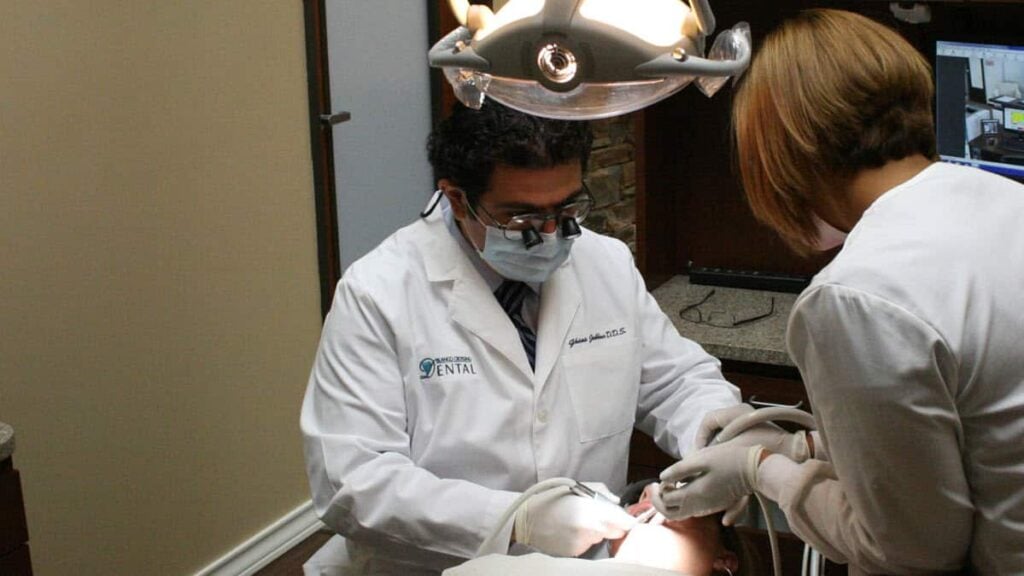
In most dental offices — including our office in Stone Oak, San Antonio — a dental hygienist performs your regular dental cleaning, with the dentist completing a thorough examination at the end. (video courtesy of the American Dental Association)
X-Rays
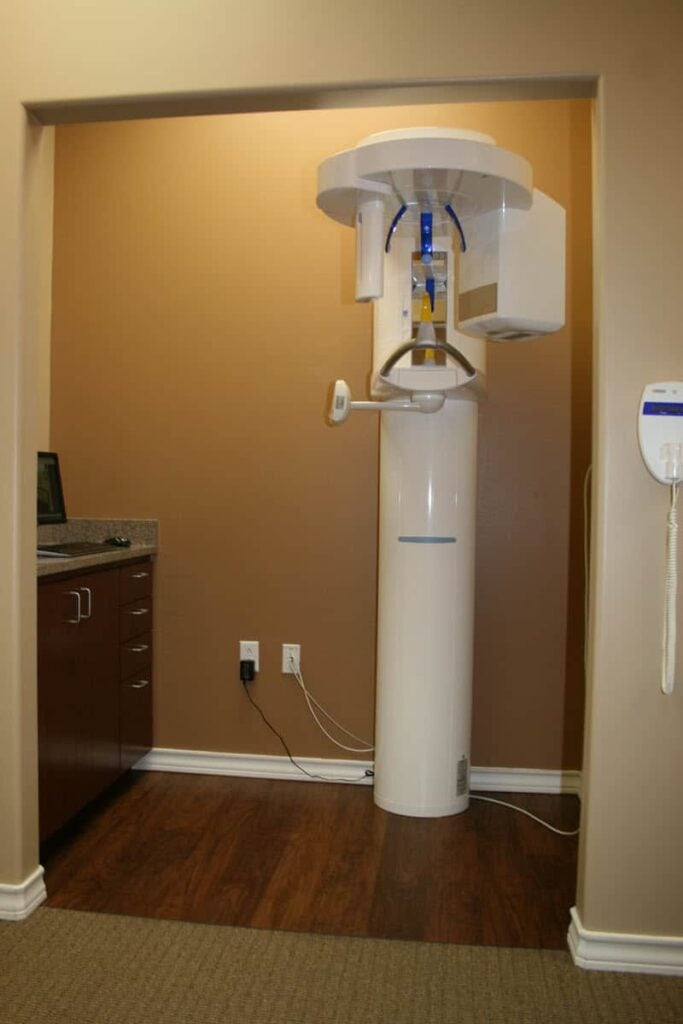
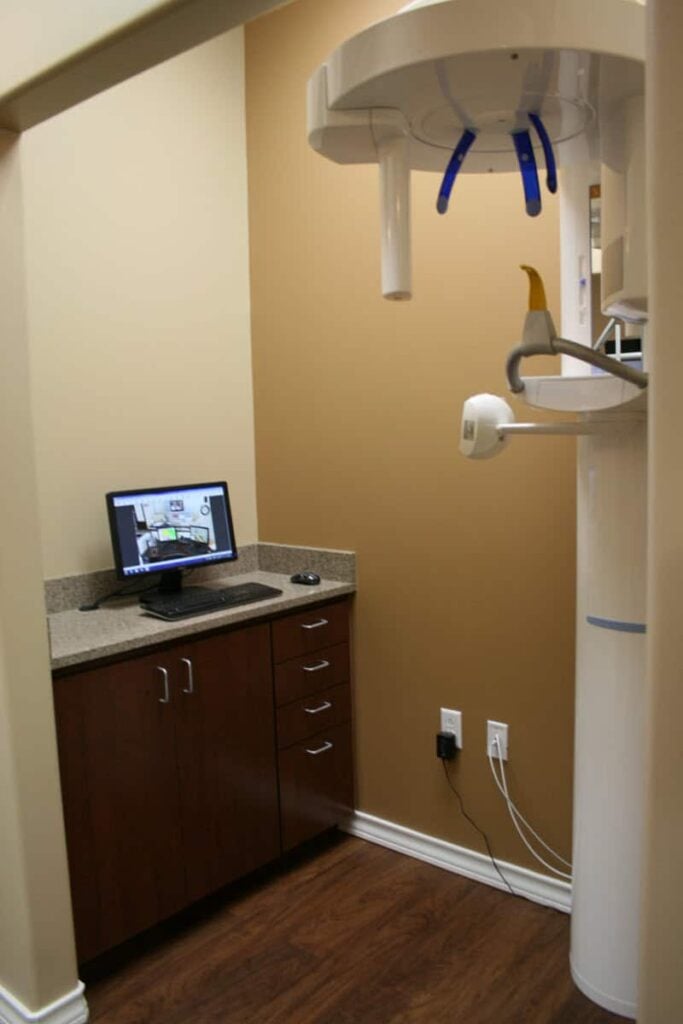
We typically take X-rays to investigate areas around and between your teeth for cavities and to assess the condition of the bones that support your teeth. We use digital X-rays to minimize radiation exposure. After the hygienist finishes the cleaning, Dr. Jabbour reviews your X-rays, discusses any findings with you, and recommends any additional treatment if needed.
Plaque and Tartar Removal
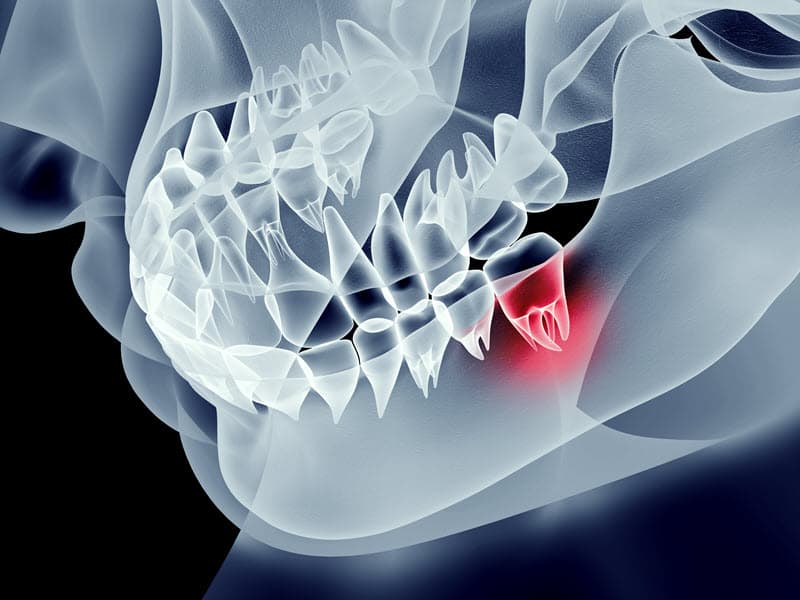
Your dental hygienist will begin by removing plaque and tartar from your teeth. Plaque is a sticky, clear film that forms from food, drinks, and saliva and adheres to tooth surfaces. It fosters bacterial growth, which erodes enamel and causes cavities. When plaque settles below the gum line, it can trigger gum disease (periodontal disease) — which, if left untreated, can lead to serious consequences including bone loss and tooth loss.
Regular brushing and flossing removes most plaque, but some always remains. Over time, that remaining plaque calcifies and becomes tartar. Tartar cannot be removed with a toothbrush — it requires a dental professional during a professional teeth cleaning.
Scaling
We use specialty dental tools to carefully scrape away plaque and tartar from your teeth and along the gum line. This part of the cleaning procedure is called scaling. We clean each tooth individually, removing built-up deposits and stains, and rinse as we go to clear away deposits, saliva, and any blood.
If plaque or tartar is present below the gum line, you may require a separate deep cleaning appointment — described in detail below.
After scaling, the hygienist polishes your teeth using a mildly abrasive paste. This smooths the enamel surface, which makes it harder for plaque to re-adhere and helps gum tissue maintain a healthy seal against your teeth.
Flossing
The hygienist will floss between every tooth to remove any remaining plaque or debris from between teeth and just below the gum line — areas your toothbrush cannot fully reach. We will also discuss any at-home oral hygiene habits and make personalized recommendations based on what we observe during your cleaning.
Although we generally recommend professional cleanings every six months, we may suggest a different schedule based on your overall oral health and any history of gum disease.
Fluoride Treatment
After your cleaning is complete, we may apply a fluoride treatment to strengthen your enamel and help protect your teeth from decay between visits. Fluoride works by strengthening areas of enamel that have been weakened by acid and bacterial activity, making your teeth more resistant to future damage. The fluoride treatment adds only a few minutes to your appointment and is one of the most effective preventative dental care steps we offer.
Regular dental cleanings don’t cause significant pain or discomfort for most patients. If you are nervous about dental procedures, please let us know — we offer several relaxation and sedation options to help you feel comfortable.
Deep Teeth Cleaning: What It Is and How Long It Takes
Signs You May Need a Deep Cleaning
Swollen or bleeding gums, gum sensitivity, or the development of pockets that separate gum tissue from your teeth are all signs of gum disease — a serious dental problem that can eventually result in bone loss and tooth loss. If any of these signs are present during your routine cleaning, Dr. Jabbour may recommend a deep teeth cleaning rather than a standard preventative cleaning.
Unlike a routine dental cleaning, the deep cleaning process typically requires multiple visits and targets bacteria and buildup that have settled below the gum line — beyond the reach of a standard teeth cleaning.
What Happens If Gum Disease Goes Untreated
Early treatment is critical. When gum disease is left untreated, the bones that hold your teeth in place begin to erode. Eventually, teeth loosen and fall out. Other health consequences of untreated gum disease include chronic infection, persistent bad breath, cavities, and significant bone loss — all of which become increasingly difficult and expensive to treat the longer they are ignored.
Periodontal Disease Cleanings (Scaling and Root Planing)
The earliest stage of gum disease is called gingivitis, which is caused by bacteria that inflame the gums. Symptoms include bleeding gums, swelling, redness, and tenderness. Gingivitis can be treated effectively with a deep cleaning before it progresses further.
For deep cleaning, we use several types of dental tools — including ultrasonic scalers — to remove plaque and tartar from below the gum line and along the tooth roots. Root planing follows, smoothing rough areas near the tooth root where bacteria tend to collect and re-adhere. Because this process reaches tissue and bone structures that a typical teeth cleaning does not, we numb your gums with a local anesthetic to keep you comfortable throughout.
We then apply an antiseptic to the tooth and surrounding tissue to eliminate any remaining bacteria.
Depending on the extent of the problem, we may divide your deep cleaning into multiple sessions — typically treating one half of the mouth per visit. Each deep cleaning session lasts approximately 45 minutes to one hour per quadrant.
Advanced Gum Disease: Periodontitis
Gum disease that progresses beyond gingivitis is called periodontitis, which begins to affect the bones and connective tissues holding your teeth in place. Your gums may recede, and pockets can develop between your teeth and gum tissue. Bacteria invade these spaces, eroding teeth, tissue, and bone. Treatment at this stage depends on the severity.
You don’t want periodontitis to progress to the point where tooth loss or a diseased tooth requires a tooth extraction. The loss of a tooth has serious effects on bone loss and shifting teeth. In these cases, a dental implant is often times the best method to stabilize jaw bone and prevent further shifting. Dental implants are a complex and costly procedure that usually aren’t completely covered by dental insurance plans.
Advanced periodontitis may require surgical intervention. In those cases, Dr. Jabbour will create small incisions in the gum tissue to expose the affected portion of the tooth beneath the gum line.
After cleaning and disinfecting the area, the gum tissue is repositioned snugly against your teeth. We offer several pain management options and will discuss them with you fully before beginning so you are comfortable and informed throughout the process.
Recovery After a Deep Cleaning
After scaling and root planing, your teeth may be temporarily sensitive and your gums may feel sore. You will receive specific post-treatment instructions based on your individual procedure. We may also prescribe antibiotics to prevent bacteria from spreading.
Eating soft foods, avoiding very hot or cold beverages, and rinsing with warm salt water can ease the discomfort during recovery. Soreness, swelling, and redness will subside as your gums heal — and it is important to continue brushing and flossing throughout this period to prevent further bacterial buildup and to maintain your oral health.
Scheduling Your Dental Cleaning in Stone Oak, San Antonio
At our Stone Oak office at 19179 Blanco Road — just off the corner of Blanco Road and Huebner — a routine teeth cleaning appointment for new patients typically runs about 60 minutes, since we also complete a comprehensive exam and X-rays on the first visit. Returning patients in good oral health often finish in 30 to 45 minutes.
Dr. Jabbour and his team serve patients throughout North San Antonio, including Stone Oak, Canyon Springs, Timberwood Park, and surrounding neighborhoods. Whether you are due for a regular cleaning or have concerns about gum disease, we are here to help you maintain your oral health in a comfortable, low-pressure environment.
If you are ready to schedule or have questions about what to expect at your first visit, contact our office or call us at (210) 314-7949.
Insurance
Our office is an in-network partner with many dental insurance providers. We work directly with your insurance company and can help you with claims.
Dental cleanings and exams are considered preventative care by most dental insurance plans, and the majority of plans cover at least a portion — often all — of the cost of a routine teeth cleaning twice per year.
If you do not have dental insurance, other payment options are available. Visit our page for patients without dental insurance to learn more about financing and cash payment options.